Posted on Leave a comment

Bike Braking Stability-Front to Rear Pannier weight distribution

Front and Rear Pannier weight distribution, Brule Adventure Gear, panpack convertible pannier backpacks

I came across a string of posts recently that was suggesting preference for a 60% front wheel to 40% rear wheel pannier weight distribution. This might work under some conditions, such as on straight even terrain with no turns. But when it comes to bike braking stability, it’s not the best distribution under braking and here’s why.

Under braking, ideally you want to achieve 50% of the load at the front and 50% over the rear wheel. This distribution is more stable and should result in uniform wear of brake components and tires. Equal load on each wheel both maximizes grip around turns and helps control under braking.

50/50 Front to Rear wheel load distribution under braking:

To achieve this 50/50 weight distribution under braking the front panniers should weigh less than the rear panniers. This is because when you brake, the dynamic load affect increases the reaction at the front wheel while reducing the reaction on the rear wheel. You have probably observed this process many times. Like on the road when a car stops and the front of the vehicle drops while the rear of the vehicle raises up.

There is a bit of guess work and some physics involved to understand what the ratio of front pannier to rear pannier weight should be. It will depend on the total weight of your panniers; the wheel spacing and the height of your panniers center of gravity above the road.

Physics behind the weight distribution

The schematic free body diagram below shows the pannier forces in play that will impact the weight distribution on your wheels while braking.

R1 and R2 represent the wheel reactions and while the sum of R1 + R2 will remain the same under braking. The value of each will change depending on: the weight of each bag; the dimensions X and Y and how quickly the bike stops (A).

Each bike will be slightly different in set up but values for X and Y can be easily measured. Some guesswork is involved for the value of A though. If your goal is to encourage even wear and tear on your breaks and tires, than an average value of A should be used. Lets assume this would be a value of 0.5g (or half the acceleration due to gravity).

Calculations and Equations:

Remember the goal is to find the weight distribution between front and rear panniers that will result in equal load on the front and rear wheels under braking. So we want to have R1= R2 under braking

On average a bikes wheel base (X) is around 1 M and the average height (Y) is 0.5 M. So with this information we can calculate a ratio of front to rear panniers as follows:

EQUATIONS: X=0.5Y ; R2=R1 ; H1=.5W1 ; H2=0.5W2;

Plugging these values into the equations 1 and 2 above, we can solve for R1 and R2 in relation to W1 and W2:

W2-(.5W1+.5W2)*0.5=W1+(.5W1+.5W2)*0.5

W2-0.25W1-0.25W2=W1+0.25W1+0.25W2

.5W2=1.5W1

W2=3W1

Findings and Conclusions:

So the total pannier weight is W1+3W1 = 4W1 and the ratio of total weight front / back would be 1/4 front and 3/4 rear. In terms of percentages this works out to 25% on the front panniers and 75% in rear panniers.

Of course as noted earlier in the post, every set up will be different and will depend on your goal in the long term. For example if you prefer to have more control / stability under braking, you may consider a weight distribution that results in the front wheel reaction being less than the rear wheel reaction under braking. In this case, you could lower the center of gravity of the panniers or get a bike with a wider wheel base. You could also consider to lighten the weight of the front panniers.

Regardless the goal (component wear or increase stability control under braking), both can be achieved by a weight distribution that places more load over the rear wheel than the front wheel.

Happy cycling! check out front and rear panniers that convert into backpacks at www.panpack.ca

Schematic Free body diagram of forces related to front and rear bike panniers under braking
Posted on Leave a comment

Optimal Pannier Weight Distribution for Cycling Stability

Front and Rear Pannier weight distribution, Brule Adventure Gear, panpack convertible pannier backpacks

I recently noticed several posts. They suggested a preference for a 60% front wheel to 40% rear wheel pannier weight distribution. This might work under some conditions, such as on straight even terrain with no turns. But its not the best distribution under braking and here’s why.

Under braking, ideally you want to achieve 50% of the load at the front and 50% over the rear wheel. This distribution is more stable and should result in uniform wear of brake components and tires. Equal load on each wheel both maximizes grip around turns and helps control under braking.

50/50 Front to Rear wheel load distribution under braking:

To achieve this 50/50 weight distribution under braking the front panniers should weigh less than the rear panniers. When you brake, the dynamic load affect increases the reaction at the front wheel. At the same time, it reduces the reaction on the rear wheel. You have probably observed this process many times. You can notice it on the road. When a car stops, the front of the vehicle drops. Meanwhile, the rear of the vehicle raises up.

There is guess work involved. Some physics is also necessary to understand what the ratio of front pannier to rear pannier weight should be. It will depend on the total weight of your panniers. It will also depend on the wheel spacing and the height of your pannier’s center of gravity above the road.

Physics behind the weight distribution

The schematic free body diagram below shows the pannier forces in play. These forces will impact the weight distribution on your wheels while braking.

R1 and R2 represent the wheel reactions. The sum of R1 + R2 will remain the same under braking. The value of each will change depending on the weight of each bag. They will also depend on the dimensions X and Y. Additionally, how quickly the bike stops (A) will affect their value.

Each bike will be slightly different in set up but values for X and Y can be easily measured. Some guesswork is involved for the value of A though. To encourage even wear and tear on your brakes and tires, use an average value of A. Let’s assume this would be a value of 0.5g (or half the acceleration due to gravity).

Calculations and Equations:

The goal is to find the weight distribution between front and rear panniers. This will result in equal load on the front and rear wheels under braking. So we want to have R1= R2 under braking

On average a bikes wheel base (X) is around 1 M and the average height (Y) is 0.5 M. So with this information we can calculate a ratio of front to rear panniers as follows:

EQUATIONS: X=0.5Y ; R2=R1 ; H1=.5W1 ; H2=0.5W2;

Plugging these values into the equations 1 and 2 above, we can solve for R1 and R2 in relation to W1 and W2:

W2-(.5W1+.5W2)*0.5=W1+(.5W1+.5W2)*0.5

W2-0.25W1-0.25W2=W1+0.25W1+0.25W2

.5W2=1.5W1

W2=3W1

Findings and Conclusions:

The total pannier weight is W1+3W1, which equals 4W1. The ratio of total weight is 1/4 at the front and 3/4 at the rear. In terms of percentages this works out to 25% on the front panniers and 75% in rear panniers.

Every set up will be different. It will depend on your goal in the long term, as noted earlier in the post. For example, if you prefer to have more control or stability under braking, consider adjusting the weight distribution. This adjustment should result in the front wheel reaction being less than the rear wheel reaction during braking. In this case, you lower the center of gravity of the panniers. Alternatively, get a bike with a wider wheel base. Also consider to lighten the weight of the front panniers.

Regardless of the goal, whether part wear or increased stability control under braking, both can be achieved. This is possible by distributing weight to place more load over the rear wheel than the front wheel.

Happy cycling! check out front and rear panniers that convert into backpacks at www.panpack.ca

Schematic Free body diagram of forces related to front and rear bike panniers under braking


Subscribe below for Early Product Release Notifications and Brule Adventure Gear – Sales

Enter your email below to receive updates.

Posted on Leave a comment

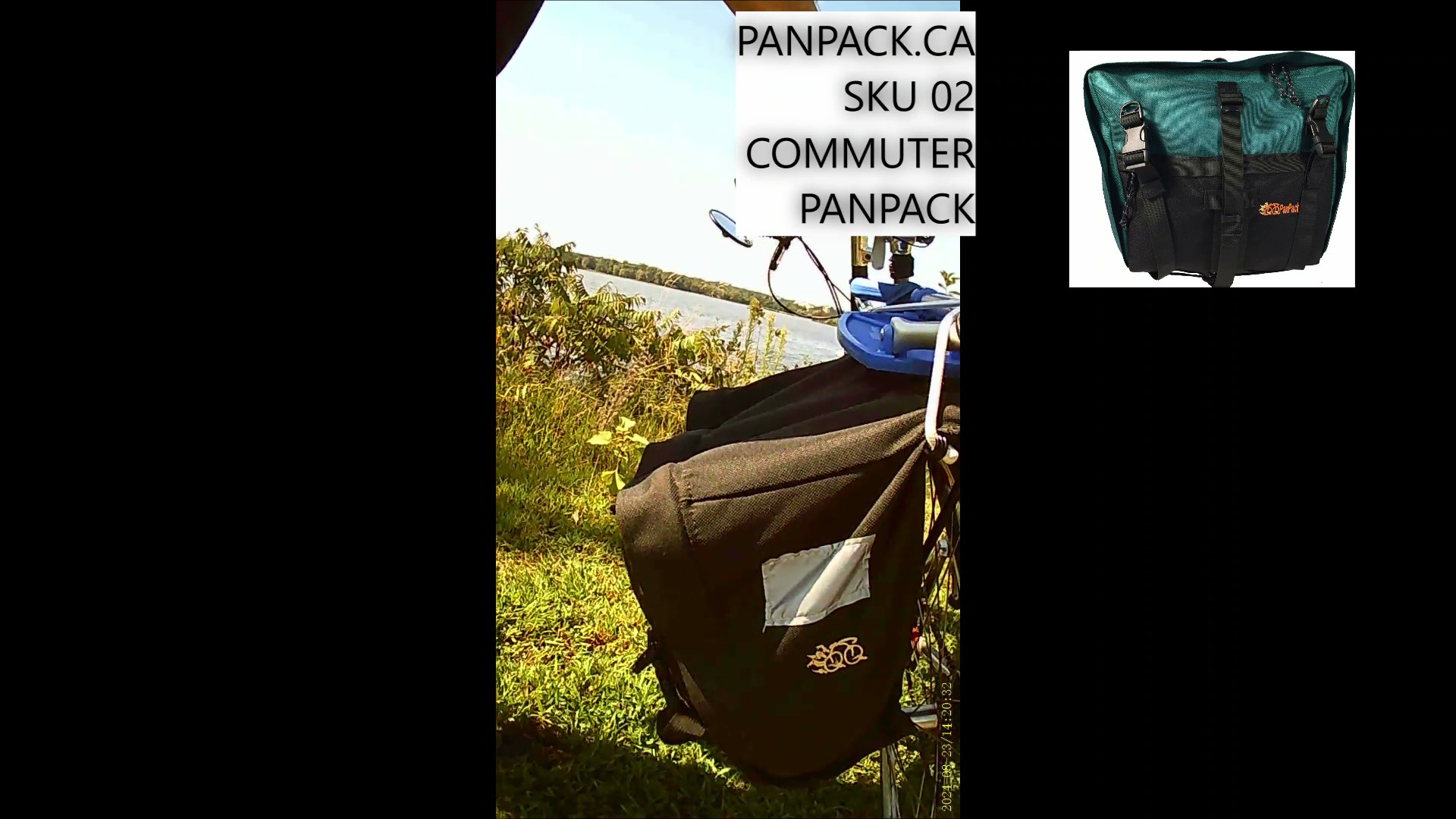
Bike with BAG – Ride through Ottawa with the Commuter PanPack

This video takes you on a bike ride through the streets of Ottawa. We bike from Westboro down to the Ottawa river. The route weaves through paved and rough streets; along bike paths and traverses bumpy terrain.

Attached to the rear rack of the bike is the Commuter PanPack. This is a convertible bike pannier bag backpack created and manufactured by Brule Adventure Gear.

Along the way, you’ll hear some tour guide descriptions. You’ll also gain interesting insights into the amazing features offered by the Commuter PanPack.

Enjoy the summer day!

Bike Ride with the Commuter PanPack (SKU02)
Posted on Leave a comment

Touring bike stability

Packing panniers for stability on the bike

If you have ever cycle toured with gear before, you’ll understand the importance of weight positioning on bike stability. This is most evident when your stopped at a light struggling to keep the bike upright before kicking off again. Or when trying to keep the bike on track when navigating a narrow winding trail at low speeds.

Effects of Side Panniers on stability

As a structural engineer, I understand that how you pack and position your gear affects bike stability. One way to increase stability is to place gear weight evenly on both sides of the bike. Another way is to get the weight as low to the ground as you can. The lower the weight the more stable the bike.

The reason for this is that placing weight higher increases the horizontal lever arm. This occurs as the bike rotates or leans over. And this lever arms impacts the overturning moment (Mot) and the overall stability.

To help understand how this works, see the schematic free body diagram of a bike with rectangular side panniers. The diagram below shows the forces in play.

Sketch showing side panniers and forces in play

The overturning “moment” is equal to the weight (F) times the distance (d). When the distance d increases the moment also increases. The overturning moment for a bike acts about the point where the wheels touch the ground. This is indicated as point A on the sketch.

In the balanced vertical condition, the sum of the overturning moments about A is equal to zero (Mot=0). Here, each side panniers must weigh the same. The distances d1 and d2 must also be the same. If these conditions are met, the overturning from one pannier will counteract the other.

But as the bike leans over, the overturning moment Mot about A increases. This increase in moment is equal to the weight of the pannier “F.” It is multiplied by the horizontal distance. This is the distance that the center of gravity “cg” of the pannier is away from “A.” Refer to distance “d1” and “d2” in the sketch. You can see that in the leaned position, d1 has decreased and d2 has increased. The net difference between d2 and d1 multiplied by the weight F equals the net overturning moment about A.

Keep the “cg” of your gear as low as possible in the side panniers. This helps to reduce the difference between d1 and d2 as the bike leans. It reduces the overturning moment. This can be achieved by packing heavier gear (food, water, tools etc.), low in the side panniers.

Adding a Rack pack or Bar Rack for bike packing

Now if you add a high rack pack, the impact of its weight on stability can be dramatic. Adding a cantilevered bar rack will also impact stability significantly. In the sketch below, the offset distance d3 increases. This happens as the (cg) of this pack is located higher above point A. In addition, when the bike leans, the overturning moment increases. This is because there is no counter weight associated with this pack.

Sketch showing Rack pack / bar rack added to touring set up.

So to minimize the impact on overall bike stability, keep the weight of these packs low. It’s important to keep the weight of these packs to a minimum.

In summary, the following considerations are key to minimizing the affects on stability of a bike touring set up :

  1. keep heavier items as low as possible in side panniers
  2. If a bar or rack pack is important to your setup, position them as low as possible on the bike. Keep them lightly loaded.
  3. Maintain a balanced weight for each of the side panniers.

Happy touring!


Posted on Leave a comment

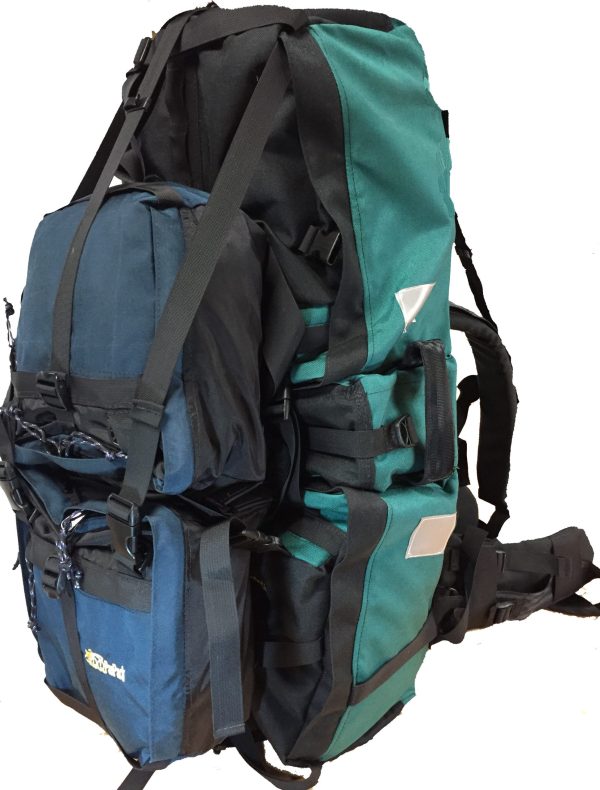
World Tour / Day Panpack – piggyback mode

World tour/day panpack in piggy back mode
World Tour / Day panpack attached together

The world tour panpack is a full size (61 liters) internal frame backpack. And it converts into touring panniers that can be fastened to a standard rear pannier carrying rack. The Day panpack is a 16 liter backpack. It also converts into bike panniers and can be fastened to a standard front or rear rack.

Together the Day panpack and the World Tour model form a complete touring backpacking package. Consider the World Tour / day panpack combination for a versatile travel solution. This is because the day panpack can ride piggy back on the World tour model while in backpack mode!

Below is a video that shows the day panpack to world tour panpack attachment process.

SKU-004: Pannier backpack-World Tour PanPack

Posted on Leave a comment

Commuter PanPack Conversion Video

Commuter panpack on the road in Ottawa
panpack on the road in Ottawa

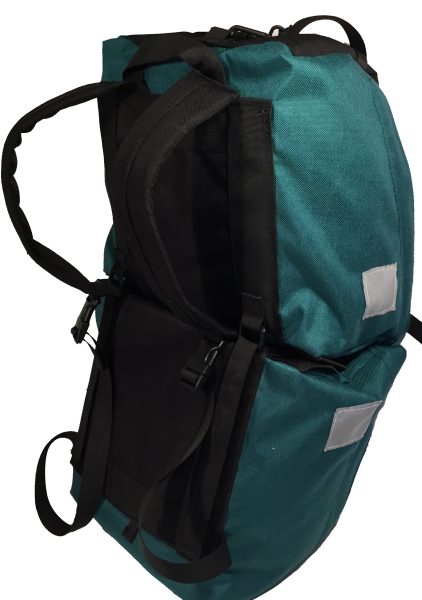
The Commuter PanPack by Brule Adventure Gear converts from panniers to a backpack in seconds. Large enough to carry all your work or school supplies for commuting during the week. Or pack all your gear for the weekend cycle camping trip. This versatile pack will do all this and more!

Below is a quick instructional video showing the Commuter panpack conversion process from pannier mode to backpack mode

The Commuter panpack convertible pannier backpack
PanPack in backpack mode,


https://panpack.ca/product/bike-pannier-weekender-panpack/
Posted on Leave a comment

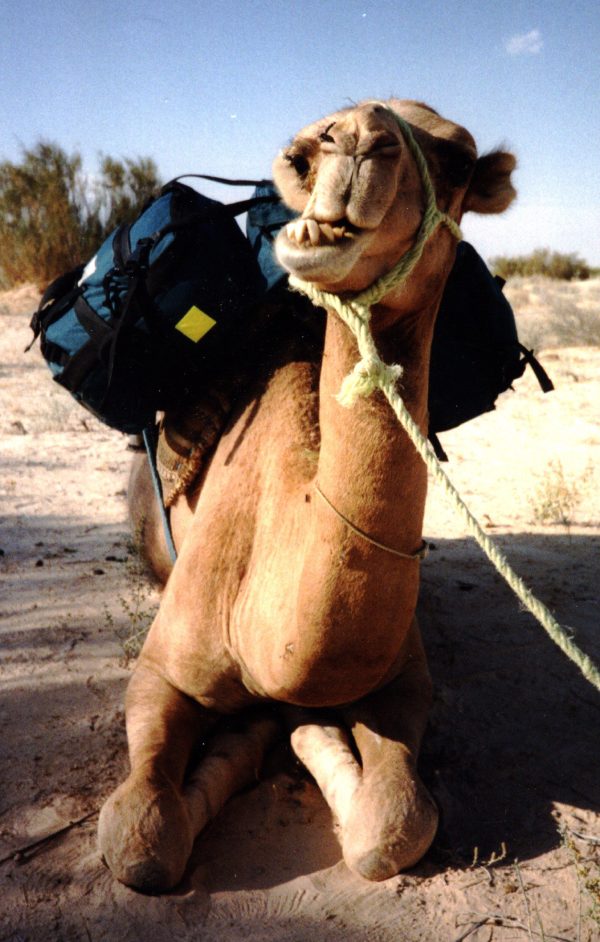
World Tour PanPack on Camel Back

World Tour panpack on camel back

The World Tour PanPack is essential world tour gear thanks to its versatilityโ€”it’s not only a great set of touring bike panniers and exceptional trekking backpacking but it also rides on camels!

World Travelers never know where they’ll end up or what adventure gear they’ll need. With the World Tour panpack you’re ready for any challenge, including an extended dessert tour by camel. Mike and Christel found this out during their cycle tour of Tunisia. With the world tour panpack the camels and the humans were happy.

World Tour gear the panpack on camel back 2
World Tour panpack on camelback
Posted on Leave a comment

Commuter PanPack-Conversion Video

Weekender / Commuter panpack pannier bags / backpack

Here is an instructional video showing the conversion of the Commuter PanPack model from pannier mode to backpack mode. If you’re interested in panniers to backpack conversion, this model offers flexibility and convenience. The Commuter panpack has a storage capacity of 33 liters. Plus the D rings on the outside of each compartment Let you bungy more gear to the top.

See also our instruction page.

Commuter panpack, converting panniers to backpack
Commuter panpack in pannier bag mode
Posted on 1 Comment

World Tour PanPack- conversion video

World Tour conversion pannier to internal frame backpack
World Tour convertible pannier backpack
Expedition backpack that converts to panniers.

Several years ago, I went on a world tour and could have used the rugged versatility of the World Tour PanPack.ย  However it wasnโ€™t until the last leg of the tour, that the pannier backpack โ€“ย  PanPack design was born.

The World Tour pannier backpack has been designed and constructed to meet the everyday challenges of such an expedition. It is the largest of our convertible pannier/backpacks.ย  Comes with Detachable shoulder and waist padding

Below is an Instructional video – Converting the World tour PanPack from pannier mode to backpack mode. Also learn how to attach the included shoulder and lumbar padding.

https://panpack.ca/product/world-tour-panpack-bike-pannier-backpack/
World Tour pannier backpack  in the Arctic
Touring the Arctic with convertible panniers

Posted on Leave a comment

Day PanPack Rack Attachment

The Day Panpack rack attachment works on any standard rear or front rack. Its also super quick to attach and will not bump off or slide back once installed. to clarify how to correctly attach the day panpack to your rack, here is a video showing how the day panpack attachment works followed by instructions. Of course if you have any questions simply contact us at info@panpack.ca

  • Step 1: Place the panpack on the rack with the center portion on the rack platform and reflectors facing towards the back of the bike.
 day panpack rack attachment
Place panpack on bike rack

  • Step 2: Loop the strap on the center section over the lip on the bike rack platform

Loop the strap over the lip in the pannier rack
Loop strap on panpack around lip in rack

adjustable strap attaches to rack with swivel hooks
Remove swivel hook from D ring on panpack
attach day panpack to rack with swivel hooks
Fasten swivel hook to bike rack